Why Everyone is Buying the Deerrun Q1 Classic Treadmill (Full Review)
Introduction
I've been using the Deerrun Q1 Classic Treadmill in my apartment for just over four months now, and it's become the single piece of electronics I use almost every day. I bought it because I wanted a compact, foldable treadmill that could handle daily walking and occasional jogging without monopolizing my living space. What I found was a surprisingly well-thought-out machine with a few real compromises — enough strengths that friends keep asking where I got it, and enough quirks that I recommend considering what you actually need before buying.
Why I picked the Deerrun Q1
Before I ordered, I was hunting for a treadmill that would fit in a small living room, be easy to move, and still feel stable when I stepped up for a brisk 30-minute walk. The Deerrun Q1 Classic pitched itself as a compact but capable model, with foldable design, a quiet motor, and a simple console. Those were the priorities for me: space, noise, and daily reliability. After living with it, I can say it checks most boxes for the type of user who walks, power-walks, and jogs lightly rather than doing marathon training or heavy sprint intervals.
Unboxing and Assembly
When the treadmill arrived, the packaging was compact and the parts were clearly labeled. Assembly took me about 25–35 minutes alone, which I appreciated because some home fitness gear can take much longer. The manual is functional but terse — the diagrams helped more than the written steps. I needed a single wrench and screwdriver (both included), and the heaviest part was positioning the base on the floor.
One small annoyance: two small plastic trim pieces were a tight fit and required patience to align. That’s hardly a dealbreaker, but something I noticed because I like tidy setups. Once assembled, the treadmill folded and locked easily; unfolding it for a quick walk is a two-handed but straightforward motion.
Design and Build Quality
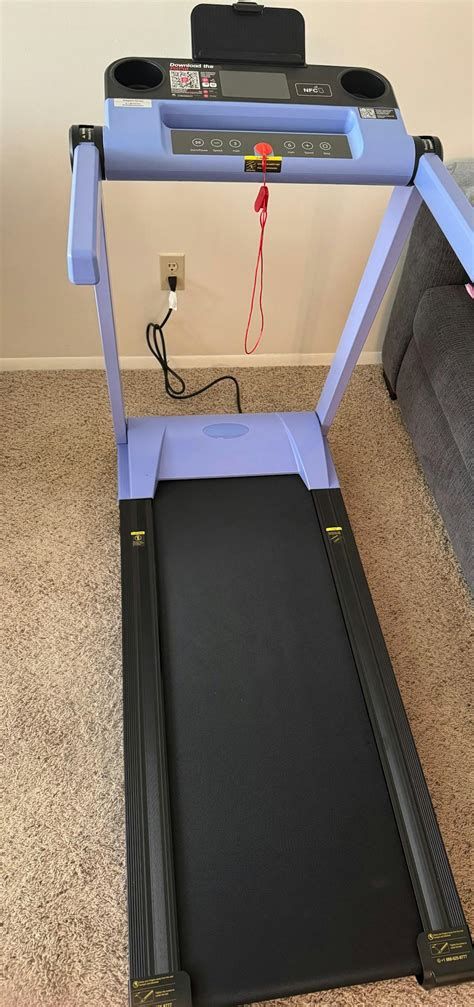
At first glance the Q1 feels compact and modern. The frame is mostly steel with a matte finish that resists fingerprints. The handrails are short and slim — intentionally so to save space — but if you rely heavily on rails for balance during fast intervals, they feel less substantial than a full-length bar. I appreciated the minimal footprint; it tucks under my sofa upright and frees my floor for the rest of the day.
The belt area is narrower than full-size home treadmills but broader than the truly under-desk models. In practice, I felt comfortable walking and light jogging without feeling cramped, though wider runners might prefer a roomier deck.
Performance: Motor, Speed, and Incline
In my experience, the motor is the Q1’s most pleasant surprise. It starts smoothly, cruises with minimal vibration, and remains quiet at normal walking speeds. I use it at speeds between 3 and 9 km/h most days; at those settings it barely raises above ambient noise. If you ramp it up toward the top of its range, the motor and belt sound becomes more noticeable but still not intrusive.
Top speed is sufficient for my jogging sessions — I wouldn’t call it a sprinting treadmill, and I tested short intervals only. The machine handles cadence changes well; there’s no jerky acceleration when I tap the controls. Speaking of controls, the console includes quick-select speed buttons that make jumping between paces convenient.
The treadmill offers a modest, manual incline with a couple of positions. I used these for a bit of extra resistance during longer walks. It’s not a powered incline system, so you can't adjust grade while running, and the incline steps are gentle. For hill training fans this is a limitation; for everyday walking and light jogging it’s fine.
Console, Controls, and Connectivity
The Q1 has a simple LED console that displays speed, time, distance, and calories. It’s straightforward — nothing flashy — and I liked that it stayed visible at a glance. There’s a small shelf for a phone, and Bluetooth connectivity lets you pair with basic fitness apps or stream audio through the built-in speakers. I used Bluetooth a lot for podcasts and playlists; the speakers aren’t hi-fi quality, but they’re perfectly serviceable for an apartment setting.
Shop the latest Electronics picks on Amazon.
Browse Now →One annoyance: the Bluetooth pairing can be a little flaky the first few tries. After I paired once and left the treadmill powered occasionally to stand-by instead of fully off, I had fewer dropouts. Still, expect a few seconds of fiddling the first time you connect each device.
Comfort and Running Feel
Cushioning on the belt is balanced — it’s softer than a gym treadmill I used at my old office but firmer than the cheap folding treadmills I tried previously. My knees felt fine after regular 30–45 minute walks, which is the most important thing for me. The belt’s surface provides reliable grip even when my shoes were damp from a sweaty jog.
Foot placement is stable, and the frame doesn’t wobble on my laminate floor. I do use a thin rubber mat underneath, which reduced slippage and slightly reduced noise transmission to the floor below.
Noise and Neighbors
Noise was a major concern for me because I live in an apartment. In my experience, the Q1 is quiet enough for daytime use without d…Durability and Maintenance
After four months of near-daily use, I haven’t experienced any mechanical issues. The belt needed a small tension adjustment once (a couple of turns with the included wrench) and I lubricated the belt as recommended in the manual at about the six-week mark. The surface finish has held up against scuffs from shoes and the occasional dropped water bottle. My only long-term question is how the console buttons will age; they feel plastic-y compared to the sturdier buttons on more expensive units, but they’re still working fine.
What I Liked (Pros)
- Compact footprint: It folds up easily and fits in tight spaces — ideal for apartments or small rooms.
- Quiet motor: Very pleasant for walking and light jogging; low disturbance for household members and neighbors.
- Good cushioning: Balanced deck that’s gentle on joints without feeling unstable.
- Simple, usable console: Easy quick-select speed buttons and clear readouts; Bluetooth for audio is a nice touch.
- Fast assembly: Took me under 40 minutes to get it ready without help.
What Bothered Me (Cons)
- Narrower handrails: Short, slim rails make high-speed intervals feel less secure if you prefer a firm grip.
- Limited incline: Only manual, low-step incline — not suitable for serious hill training.
- Bluetooth finickiness: Pairing can be temperamental on first use; I had a couple of dropouts early on.
- Console buttons feel cheap: Functional but not as tactile or solid as premium models.
- Not for heavy sprinting: If your workouts include frequent high-speed sprints, a sturdier, full-size treadmill would be better.
Comparison Table
| Model | Motor (approx) | Top Speed (km/h) | Belt Size (cm) | Foldable | Noise (subjective) |
|---|---|---|---|---|---|
| Deerrun Q1 Classic | Modest but smooth (suitable for walking/jogging) | Up to ~10–12 km/h | Medium (comfortable for walking and light jogging) | Yes | Low at walking speeds; moderate at jog speeds |
| Generic compact treadmill (entry-level) | Low-powered (best for walking) | Up to ~8–10 km/h | Narrow (best for walking/under-desk) | Yes | Low to moderate (can be noisy at any speed) |
| Traditional home treadmill (mid-range) | Stronger motor (sprints & heavy use) | Up to ~16–20 km/h | Wide (good for running) | Often no (bulkier) | Moderate to high (powerful motor noise at high speeds) |
Who the Deerrun Q1 Classic Is For
In my experience, the Q1 is ideal if you fall into one or more of these categories:
- You live in an apartment or small home and need a treadmill that stores upright.
- You primarily walk, power-walk, or do short jogging sessions rather than long-distance running.
- You want a quiet machine that’s friendly for morning or daytime use without a lot of noise.
- You value easy assembly and simple features over a complicated console with dozens of programs.
Conversely, if you’re an avid runner who needs a wide deck, powered incline, and high top speed for frequent sprints or marathon training, I noticed the Q1 will feel limiting after a few months of intense use.
Buying Guide: What to Consider Before You Buy
When I was choosing a treadmill, a few practical considerations made the difference between a purchase I regretted and one I enjoyed daily. Here’s what I recommend you check before buying, based on my own experience with the Deerrun Q1 Classic.
1. Space and Storage
Measure the area where the treadmill will live. The Q1’s foldable design saved me a lot of floor space, but you still need clearance for your stride and headroom. Measure both unfolded footprint and stored height to avoid surprises.
Looking for the best Electronics deals on Amazon?
See Deals →2. Intended Use
Be honest about how you’ll use it. If you plan to mostly walk and do occasional jogging, a compact treadmill like the Q1 is efficient and comfortable. If you intend to do interval sprints or heavy running, look at full-size models with higher HP motors and wider belts.
3. Noise Concerns
If you live with neighbors or do workouts early or late, prioritize quiet operation. I recommend testing or watching video demos (without relying only on reviews) to get a sense of noise. In my experience, the Q1 is good for apartment use but not silent at top jog speeds.
4. Belt and Deck Size
The running surface matters more than most people realize. A wider belt gives you more confidence when your pace picks up. I found the Q1’s deck comfortable for everyday use, but runners with a longer stride will want to seek wider decks.
5. Warranty and Service
Check the warranty on the frame, motor, and electronics. Ask the seller about service options and replacement parts availability in your area. I didn’t need to use warranty service, but having that peace of mind mattered when I bought the treadmill.
6. Extra Features
Decide which extras you actually need. For me, Bluetooth audio and a stable phone shelf were nice-to-haves. If you want complex training programs, heart rate integration, or a full-color touchscreen, those are features for higher-tier models.
Real-World Tips from My Use
- Put a thin rubber mat under the treadmill to protect your floor and reduce noise transmission.
- Keep the treadmill on a stable, flat surface — mine felt more solid after I found the sweet spot on my laminate floor.
- Lubricate the belt early (follow the manual) and check tension after a few weeks of use; a small tweak keeps the belt tracking well.
- Pair your phone before your first run and leave the treadmill in standby rather than fully off to reduce Bluetooth pairing headaches.
Conclusion
After using the Deerrun Q1 Classic for several months, I can say it hits a sweet spot for people who want a compact, quiet, and comfortable treadmill for daily walking and light jogging. My apartment-friendly setup, straightforward assembly, and the machine’s quiet performance are the reasons I still use it almost every day. I noticed practical limitations — like shorter handrails, a modest manual incline, and a console that feels basic — but none of these were dealbreakers for my needs.
If you want a straightforward treadmill that doesn't take over your space and supports a regular walking-to-jogging routine with minimal fuss, the Deerrun Q1 Classic is a strong contender. If your workouts are more intense or you require advanced incline and speed features, you’ll want to consider a mid- to high-end full-size model instead. For my lifestyle and space constraints, the Q1 has been a reliable, space-saving companion that helped me stick to a consistent routine.